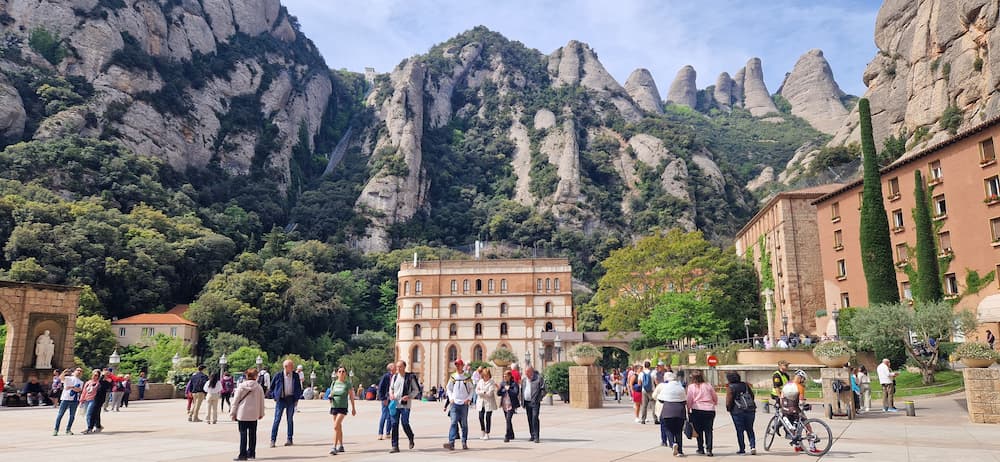
Montserrat things to do come with a catch that nobody warns you about. Deciding how to get to Montserrat is the first decision of the trip. Deciding what to do once you’re there is the second one, and that’s where most people go wrong: they arrive late, wait in line to see the Black Virgin, take a photo of the square, and by two o’clock they’re already back on the train, having missed most of what makes visiting such a special place worthwhile. What a shame.
Montserrat is not one attraction. It is a working Benedictine monastery, a basilica, an art museum with Caravaggio and Picasso on the walls, a boys’ choir documented since 1307, a holy cave reached on foot, two funiculars and a mountain of trails above it all. Some of it needs a booking. Some of it only happens at certain hours. This guide sorts it by how much time you have.
The essentials are the basilica and the Black Madonna, the boys’ choir at 1:00 p.m. on weekdays, the museum, and the walk to the Santa Cova. That adds up to about four or five leisurely hours on the mountain. With two or three hours, you can see the basilica, La Moreneta, and the square. If you have a full day, add a funicular ride and a full-fledged hiking trail. There are three things you need to reserve: the choir, the conventual Mass, and a time slot to see the Black Madonna. But don’t forget that there are many more sights that I strongly recommend you don’t miss.
The main things to do in Montserrat
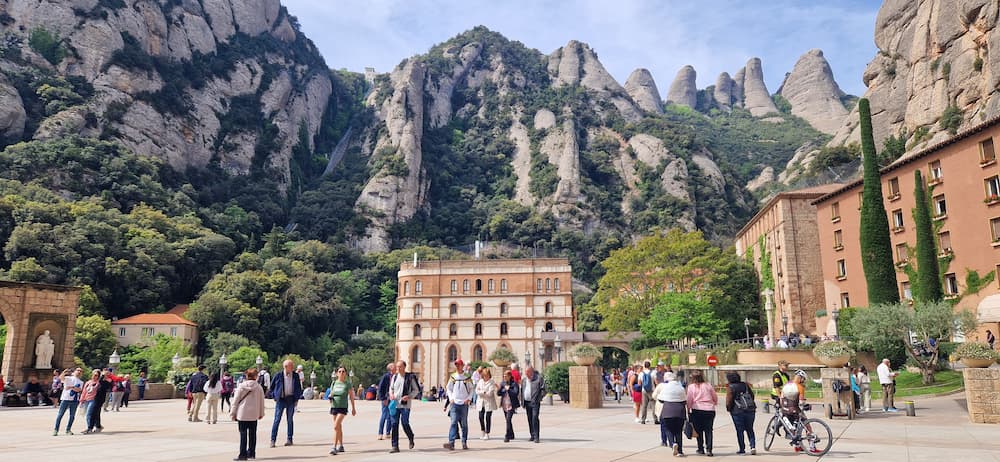
Everything listed below is within walking distance of the monastery square, except for a few viewpoints and the summits along the hiking trails. What sets them apart are their schedules and whether reservations are required. The three with set schedules—the choir, the conventual Mass, and the Black Virgin—are the ones that will determine how your day unfolds, so be sure to read about them first.
| What | Time needed | Booking | Best for | Guide |
|---|---|---|---|---|
| BasilicaTicket needed to entry | 20–30 min | Ticket required | Everyone | See → |
| Black MadonnaTimed entry | 20–40 min | Required | The reason most people come | See → |
| Boys’ ChoirFixed hour | 15 min | Required | Weekdays at 1 p.m. | See → |
| Museum | 1–1.5 h | Included in the combo tickets | Art lovers, rainy days | See → |
| Santa Cova | 45 min–1 h | No | An easy walk with a view | See → |
| Masses & vespersFixed hour | 30–60 min | Daily convent Mass at 11:00 a.m. Required | Faithful, Pilgrims, the curious | See → |
| FunicularsSanta Cova out of service | 6 min ride | Included in the combo tickets: Tot Montserrat | An easy way to get to the Sant Joan lookout points. | See → |
| Hikes & viewpointsHalf day or Full day | 12 min–7 h | No | The best part—you can’t miss it | See → |
The basilica and the monastery
The basilica is the highlight of the visit. It is open every day from 7:00 a.m. to 8:00 p.m., making it the one attraction you can always include in your itinerary, regardless of what time the train or your other mode of transportation arrives at the monastery. Construction on the building you’ll enter began in 1560, and it was consecrated in 1592.
Around it sits a working Benedictine community that has been on this mountain for a thousand years. The monastery is not a museum piece: monks live, work and pray here every day, and the visiting hours are built around that rhythm rather than around tourism.
Basilica at Montserrat: 7 best sights, hours & tickets → Montserrat Monastery: history, monks & what to see →The Black Madonna (La Moreneta)
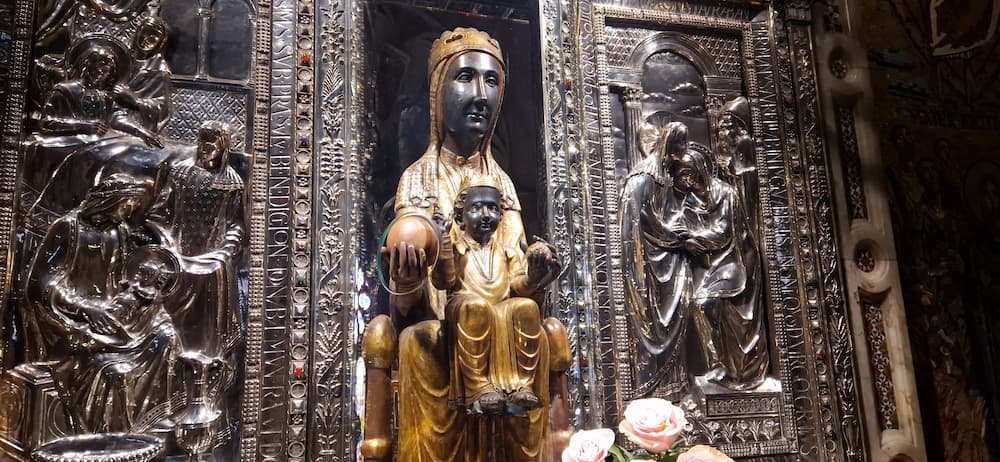
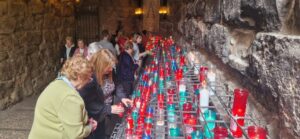
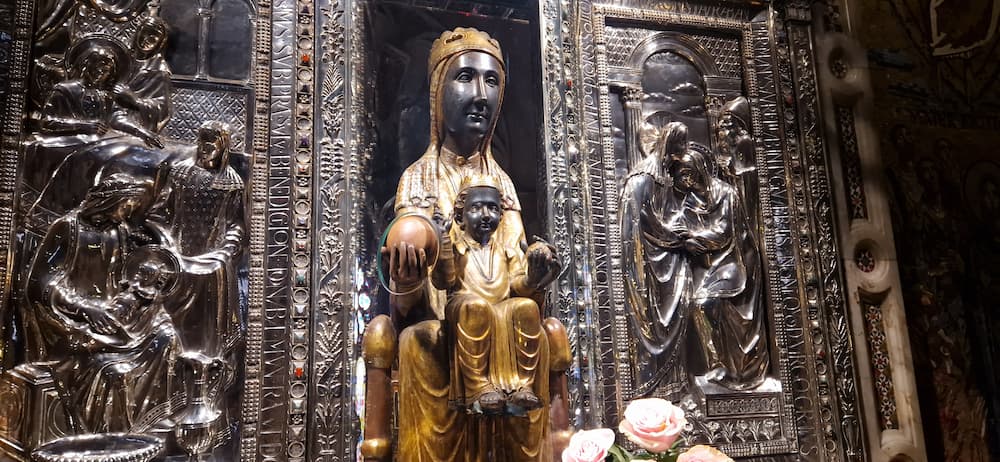
The 12th-century Romanesque carving above the high altar is the reason Montserrat is a place of pilgrimage, and the line to reach its niche is by far the longest on the entire mountain. It operates on a timed-entry system, so this is the only part of the day for which it’s really worth booking in advance.
Two tips that will save you an hour: go before the choir sings, not after; access to the chapel closes and reopens after the performance, and the rush of people that follows is huge. And if you arrive on the first train, head straight there before the tour buses from Barcelona reach the square.
Black Madonna of Montserrat: tickets, history & visiting tips →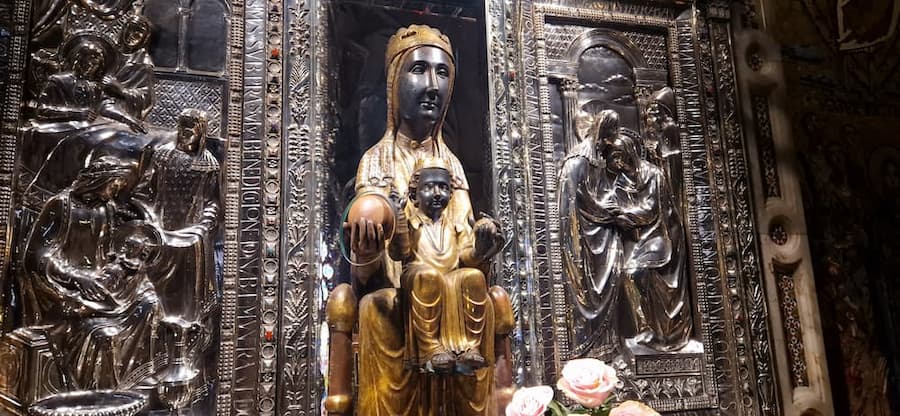
The Montserrat Boys Choir
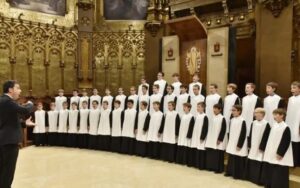
L’Escolania is a choir school documented since 1307, one of the oldest in Europe still singing in the place it was founded. More than fifty boys aged nine to fourteen, who board at the monastery during term time. They sing Monday to Friday at 1:00 p.m. and at noon on Sundays and religious holidays, for about fifteen minutes.
Three things catch visitors out, and all three are avoidable: they never sing on Saturdays, they are away for most of the summer holidays, and you now need to book in advance — turning up at the door no longer gets you in.
Montserrat Boys Choir: schedule, tickets & tips →Masses, vespers and the monastery’s daily rhythm
You do not need to be religious to find this the most memorable part of the day. Vespers at 6:45 p.m. is the monks’ sung evening prayer, and on Monday to Thursday the Escolania joins in towards the end. By that hour the day-trippers have gone: there are monks, a handful of pilgrims and almost nobody else.
Conventual Mass is held daily at 11:00 a.m. It is the most well-attended liturgy of the week and requires advance reservation.
Masses at Montserrat: times and what to expect →The museum and the audiovisual space
Most visitors walk straight past it, and it is the biggest mistake of the day. The Museum of Montserrat holds El Greco, Caravaggio, Monet, Renoir, Picasso and Dalí, plus a Le Corbusier collection and an Egyptian and Middle Eastern archaeology section. On a mountain famous for a monastery, almost nobody expects a Caravaggio.
The Espai Audiovisual — “Montserrat, portes endins” — is a separate place and a separate ticket: it sits across from the tourist information office. Eight consecutive rooms of screens, projections and immersive spaces answering what Montserrat is and why it has mattered for a thousand years. Open every day from 9 a.m. to 8 p.m., about forty-five minutes, included in the combo tickets, €5.50 for adults.
Do it first thing in the morning if you can. Half an hour in there and the rest of the day makes a good deal more sense.
Admission to the museum is included in combination tickets; learn more in our guide to the Montserrat Museum.
Museum of Montserrat: collections, hours & tickets → Montserrat Audiovisual Space: what is inside, hours & tickets →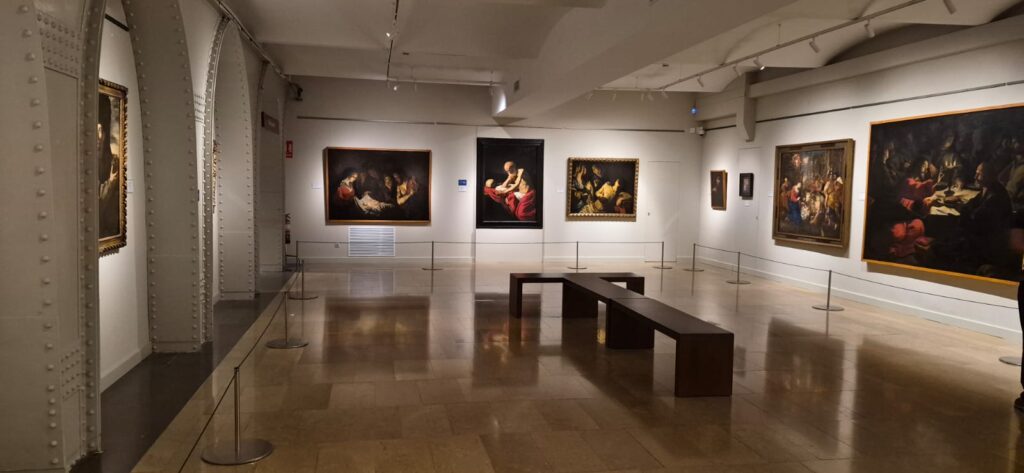
Santa Cova, the holy cave
The cave where, according to tradition, the image of the Virgin was found. The path out to it is carved along the cliff face and lined with modernist monuments by Gaudí, Puig i Cadafalch and other Catalan architects — a sculpture trail hanging over the valley, and one of the easiest walks here.
You can complete the round-trip in about forty-five minutes, or take the Santa Cova funicular down and walk back up. If you only have time for one more thing besides the basilica, this could be a great option.
Santa Cova de Montserrat: walk, funicular & how to visit →The two funiculars
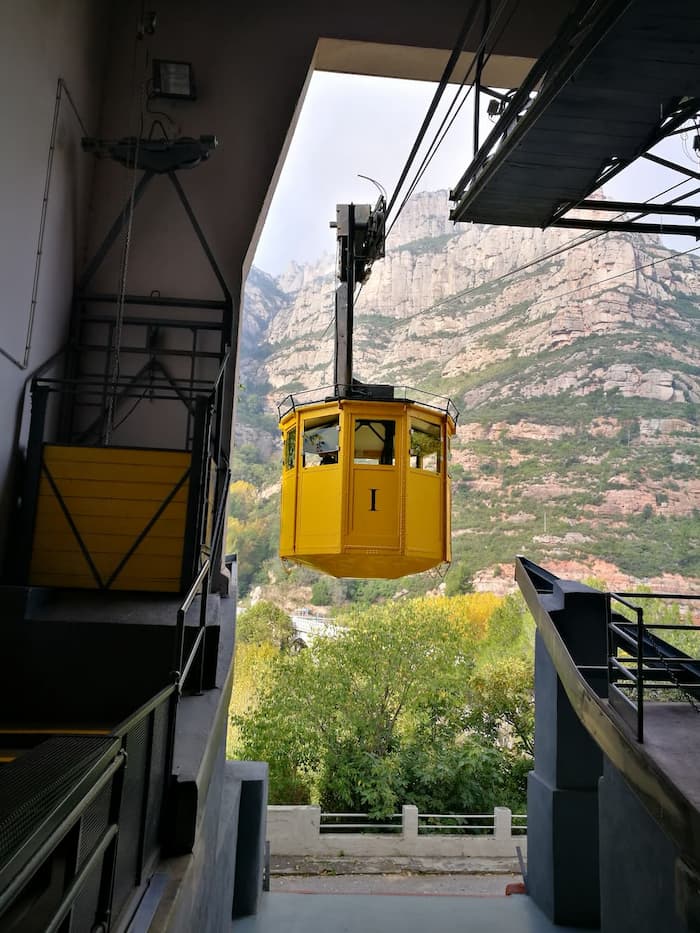
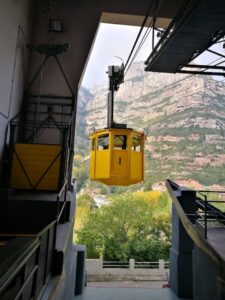
Two short funiculars depart from the monastery area and run in opposite directions. Sant Joan takes you up to 970 m to the Sant Joan upper station, where the views open up and the network of trails begins: €11.40 for a one-way ticket, €17.50 for a round-trip ticket. It’s the most economical way to turn a visit to the monastery into a simple day in the mountains.
The Santa Cova funicular goes down and drops you off at the start of the Monumental Rosary Trail toward the Holy Cave. It is currently out of service until further notice. Therefore, for now, you’ll have to reach the sacred cave on foot. Both are included in the Tot Montserrat pass when they are in operation.
Montserrat funiculars: prices, timetables and which one to take →Hikes and viewpoints
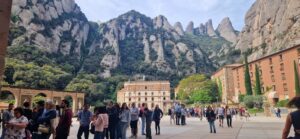
The monastery is located at an elevation of 720 m, and the mountain rises another 600 m above it. Just a twenty-minute walk in any direction is enough for the crowds to disappear completely: this is the part of Montserrat that visitors on half-day tours never see, and to which locals return time and time again.
You don’t have to be an experienced hiker. The funicular takes care of the climb for you and drops you off at viewpoints that are accessible with sturdy shoes. But if you want an authentic experience, Sant Jeroni is the peak you should climb. At 1,236 meters high and about an hour and 45 minutes one way from the monastery, it’s the hiking experience that will make your visit unforgettable.
Every route on the mountain, from a twelve-minute viewpoint walk to a seven-hour circuit, is sorted by effort in the hiking guide.
Montserrat hiking: every trail and viewpoint by effort →How to spend a day in Montserrat
This is the itinerary I would give a friend visiting on a weekday, and it is built around the only fixed point of the day — the choir at one o’clock.
First, the basilica. Then head straight to the line to see the Black Virgin while it’s still not too crowded. Next, the Santa Cova. Return to the basilica before 12:30 to get a good spot for the choir. To do this, you need to arrive on the first train in the morning.
The choir at 1:00 p.m., then lunch. Afterward, visit the museum, or take the funicular to Sant Joan and spend an hour exploring the viewpoints in that beautiful region. Finish with a stroll or by visiting the viewpoints near the monastery, which look their most stunning in the evening light.
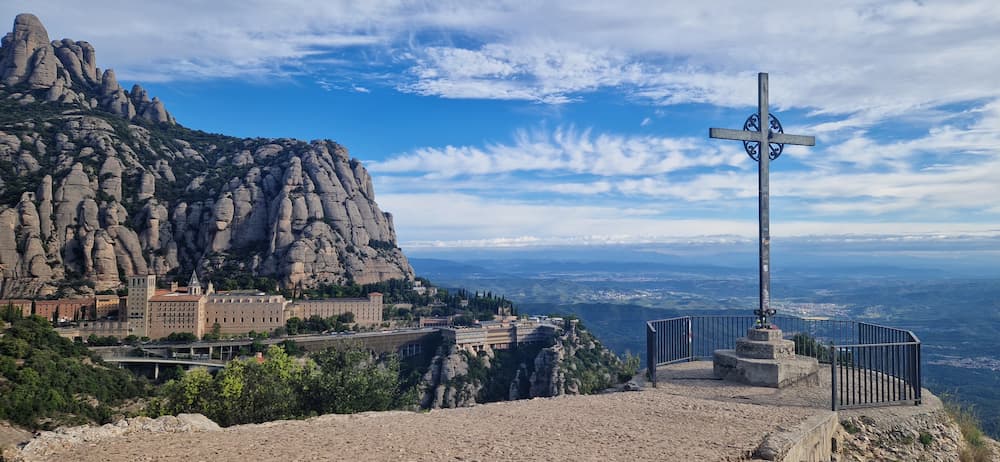
How long should you spend in Montserrat?
Getting there and back costs you about three hours of the day whichever route you take, so the question is really what you do with the rest.
- 2–3 hours — the basilica, the Black Madonna, a nearby viewpoint, the plaza, the shops, and a coffee. This is enough if Montserrat is just one more stop on a busy trip through Barcelona, but you’ll feel rushed.
- 4–5 hours — Add the choir, the museum, and the walk to Santa Cova. This is the ideal amount of time for most visitors, and this guide is structured around it.
- A full day — Add the funicular to go up to Sant Joan and a full-fledged hiking trail. The round trip to Sant Jeroni alone takes three and a half hours, so you’ll want to catch the first train leaving Barcelona.
Which visit is right for you?
First visit, one day
Basilica, Black Madonna, choir at one o’clock, museum after lunch. The classic, and it works. Book the choir and the Moreneta slot before you travel.
Travelling with children
Skip the museum and take the funicular. The rides are short, the views are the reward, and the Santa Cova hike is an easy walk that feels like quite an adventure.
You only have a morning
Basilica and Black Madonna, then the walk to Santa Cova. Leave the choir for another trip rather than building the whole morning around it.
You’ve come for the mountain
Take the funicular to Sant Joan and keep walking. You can also set out directly from the monastery; visit the basilica on the way back, when it’s empty, rather than on the way up.
Visiting on a Saturday
The choir does not sing. Build the day around the basilica, the museum and the mountain instead, and enjoy not having to watch the clock.
Why is Montserrat so famous?
Three reasons stacked on top of each other. The mountain itself is a geological freak — a mass of conglomerate rock eroded into thousands of rounded pillars, visible from Barcelona on a clear day and unlike anything else in Europe. The monastery has been there for a thousand years and holds the Black Madonna, patron saint of Catalonia. And the place became a symbol of Catalan identity, which is why the Virolai sung by the choir feels closer to an anthem than to a hymn.
In June 2026 the abbey closed its millennium celebrations with the second papal pilgrimage in its history, when Pope Leo XIV came to venerate La Moreneta before eight thousand people.
Can you visit Montserrat without a tour?
Yes. The train from Barcelona-Plaça d’Espanya connects directly to both the rack railway and the cable car. Everything on the mountain is signposted in English, and you don’t need a guide to get anywhere. What an organized tour offers you is convenience and peace of mind.
There’s another argument in favor of an organized tour: if you have two days in Barcelona and don’t feel like figuring out schedules, paying someone to handle that for you is a reasonable trade-off. Our guide on how to get to Montserrat from Barcelona compares the options and will help you choose the one that best fits your type of visit.
What should you wear to Montserrat?
The basilica is an active place of worship, so out of respect it is customary to keep shoulders and knees covered and to take off caps and hats, as in any church in Spain. Nobody will stop you at the door in shorts; the dress code starts with us.
The mountain is the part that visitors tend to underestimate. At an elevation of 720 meters, it’s always cooler and windier than in Barcelona, so be sure to bring a warm jacket even in the summer. And wear shoes with good traction, no matter what you’re doing: the cobblestone paths surrounding the monastery are made of polished stone and can be slippery when wet.
FAQ — Montserrat things to do
What not to miss in Montserrat?
Four things: the basilica, the Black Madonna, the Boys’ Choir at 1:00 p.m. on weekdays, and the walk out to Santa Cova. If you have longer, the Museum of Montserrat holds El Greco, Caravaggio, Picasso and Dalí, and almost nobody expects it.
How long should you spend in Montserrat?
Four to five hours on the mountain suits most visitors: basilica, Black Madonna, choir, museum and the Santa Cova walk. Two to three hours covers only the basilica and La Moreneta. A full day lets you add a funicular and a hike and some viewpoints. Getting there and back costs about three hours whichever route you take.
How to spend a day in Montserrat?
Plan it in reverse, starting with the choir’s performance at 1:00 p.m., the only fixed event of the day. Get there as early as possible. First, visit the basilica and wait in line to see the Black Madonna; then, visit the Santa Cova and return inside before 12:30 p.m. to listen to the choir. Later, save the museum, the funiculars, and other viewpoints and walks for the afternoon, once the tour groups have left.
Is it worth going inside Montserrat?
Yes. The basilica is open from 7:00 a.m. to 8:00 p.m., and its interior—with the Black Madonna on the high altar and the choir singing from there at 1:00 p.m.—is the reason why the mountain has become such a special place. To see Montserrat only from the outside is to miss the essence of it.
Can you visit Montserrat without a tour?
Yes. The FGC train from Plaça d’Espanya connects directly to the rack railway and the cable car. Everything on the mountain is signposted in English, and you don’t need a guide to access any of the sites. A combined ticket gives you access to all the attractions, allowing you to explore at your own pace.
What time should I go to Montserrat?
As early as possible. The first trains take you to the monastery before the tour buses arrive, which means a shorter line to see the Black Virgin and a more enjoyable experience with fewer crowds.
Is the Black Madonna worth seeing?
Yes, absolutely. That’s why Montserrat is a place of pilgrimage, and the line to get to her chapel is the longest in the monastery, which gives you an idea of what most visitors think. It’s better to go before the choir sings than after: access is closed and reopens after the performance, and then the lines get longer.
What to wear for Montserrat?
In the basilica, you must keep your shoulders and knees covered out of respect. For the mountain, it’s advisable to wear a warm jacket even in summer and shoes with good traction, since the polished stone paths surrounding the monastery are slippery when wet.
Map of Montserrat Monastery
 19 key points
Interactive Montserrat Map
A hoverable map of Montserrat Monastery: basilica, Black Madonna, museum, funiculars, viewpoints and trail starts.
Continue exploring Montserrat
Want more than the monastery?
Most hiking trails in Montserrat take between one and four hours. The Santa Cova trail is about 45 minutes return. Sant Jeroni, the summit, takes around three and a half hours from the monastery. The 13 Hermitages route is the most demanding of them all.

If this guide helped you plan your visit, then it has done its job.
I’m based in Collbató, at the foot of Montserrat, and have been hiking and exploring the mountain for more than 20 years. Author of The Ultimate Montserrat Hiking Guide Book.
Some links may be affiliate links, at no extra cost to you.