
The path to Santa Cova is currently open again after recent maintenance and safety works.
The Santa Cova de Montserrat, also known as the Holy Cave of Montserrat or the Holy Grotto of Montserrat, is one of the most symbolic places on the mountain. Many visitors come to Montserrat to see the monastery, the basilica and the famous Black Madonna, but according to tradition, the spiritual origin of Montserrat is found here: in the small cave where the image of the Virgin of Montserrat was discovered.
Visiting the Santa Cova is not just a short walk from the monastery. It is one of the best ways to understand why Montserrat became such an important religious and cultural site in Catalonia.
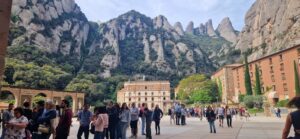
The route combines mountain scenery, religious history, modernist art and some of the most meaningful views around the sanctuary. For some visitors, it is simply a peaceful walk. For others, it is one of the most moving places in Montserrat.
This guide explains what the Santa Cova is, why it matters, how to get there from Montserrat Monastery, the current situation of the Santa Cova funicular, and what you should know before visiting.
Quick facts about the Santa Cova de Montserrat
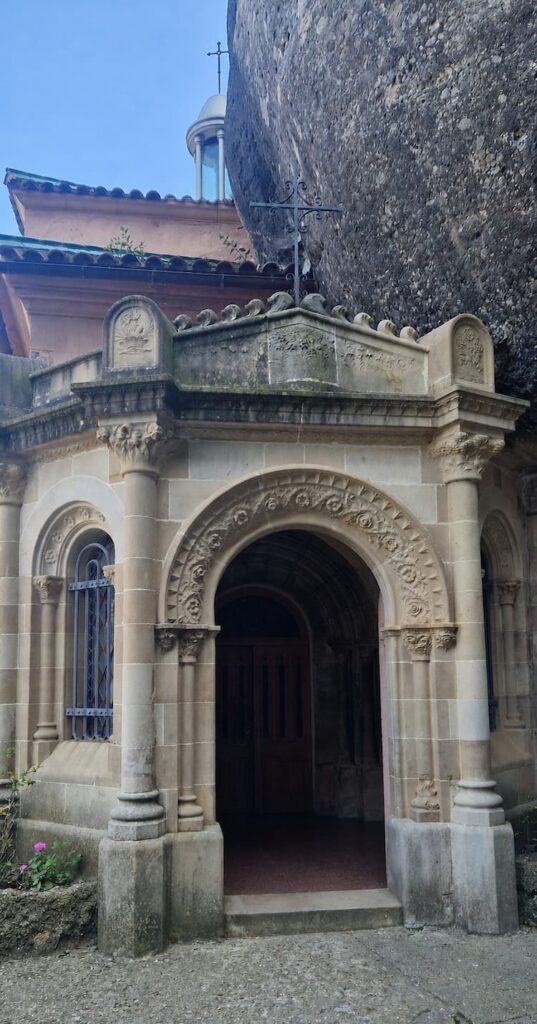
The Santa Cova de Montserrat is a small chapel built into the rock on the mountainside below Montserrat Monastery.
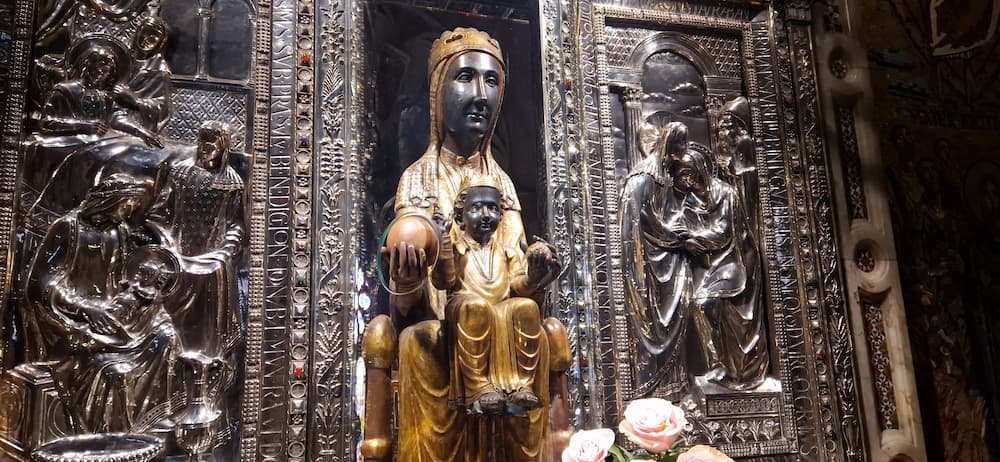
According to tradition, this is the place where the image of the Virgin of Montserrat was found by shepherds after seeing mysterious lights on the mountain.
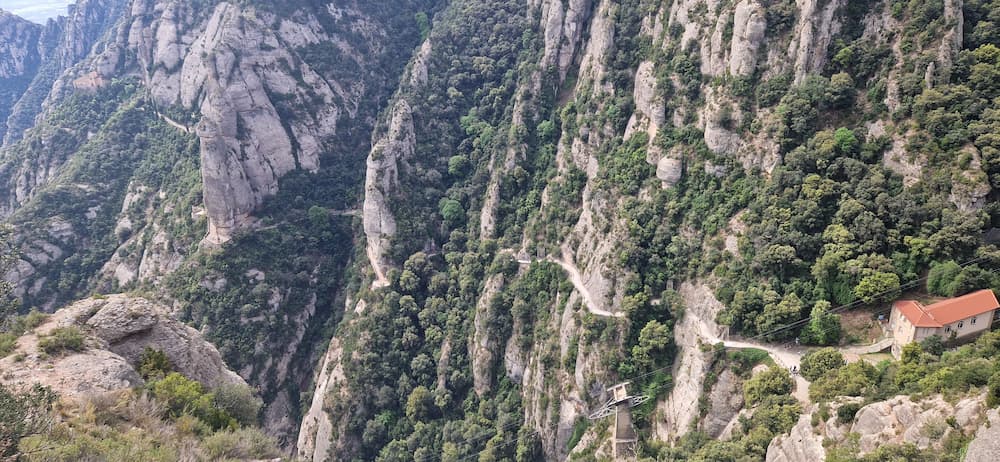
From the monastery area, you can reach the Santa Cova by following the Camí de la Santa Cova, a scenic path that descends along the mountain. The walk offers wide views over the valley and passes several religious monuments that form part of the Monumental Rosary.
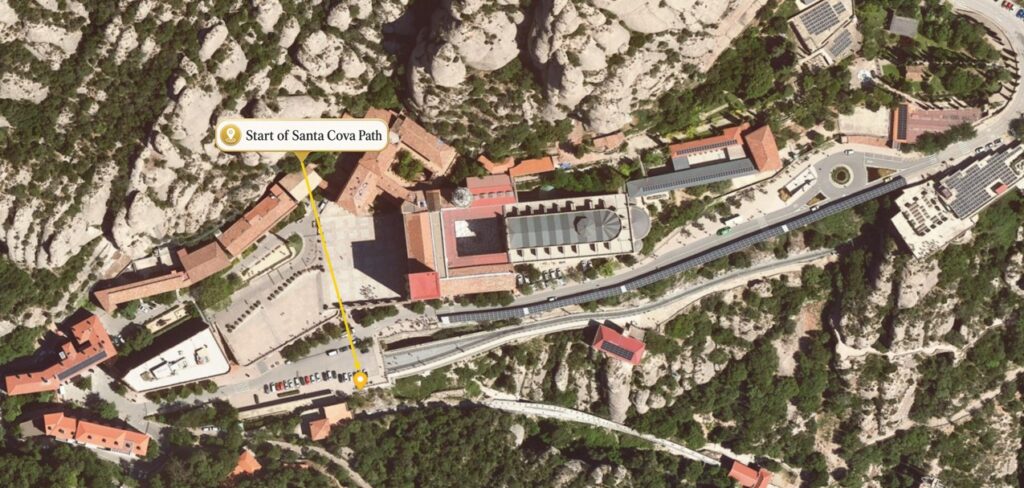
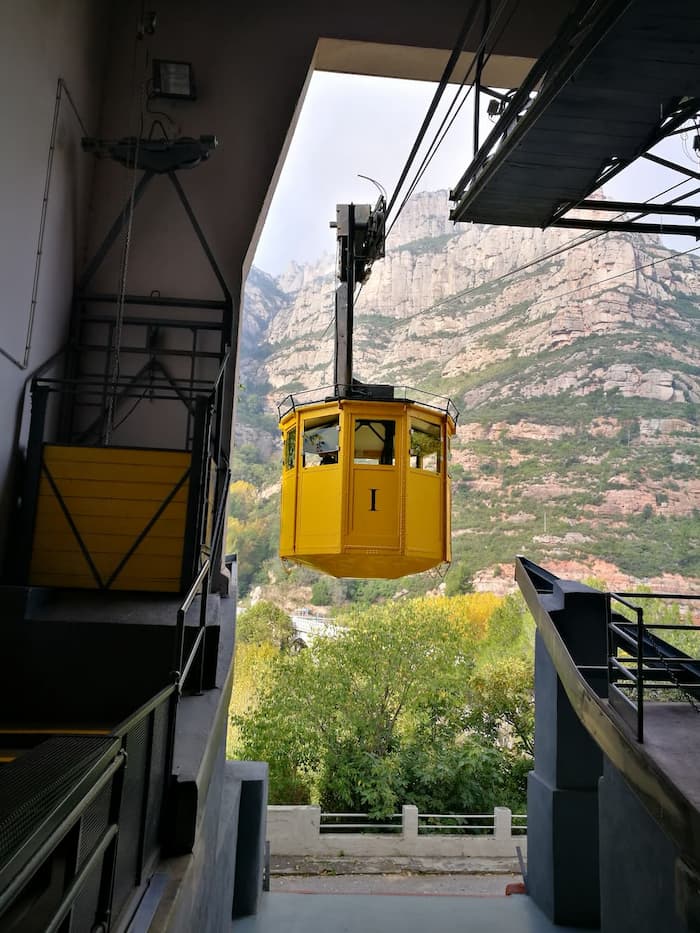
At the time of writing, the Santa Cova Funicular is listed as out of service until further notice. Visitors should currently plan to reach Santa Cova on foot and check the official schedule before starting the walk.
What is the Santa Cova de Montserrat?
The Santa Cova de Montserrat is a small religious site located on the slope of the Montserrat mountain, below the main monastery complex. It is traditionally considered the place where the image of Our Lady of Montserrat was found.
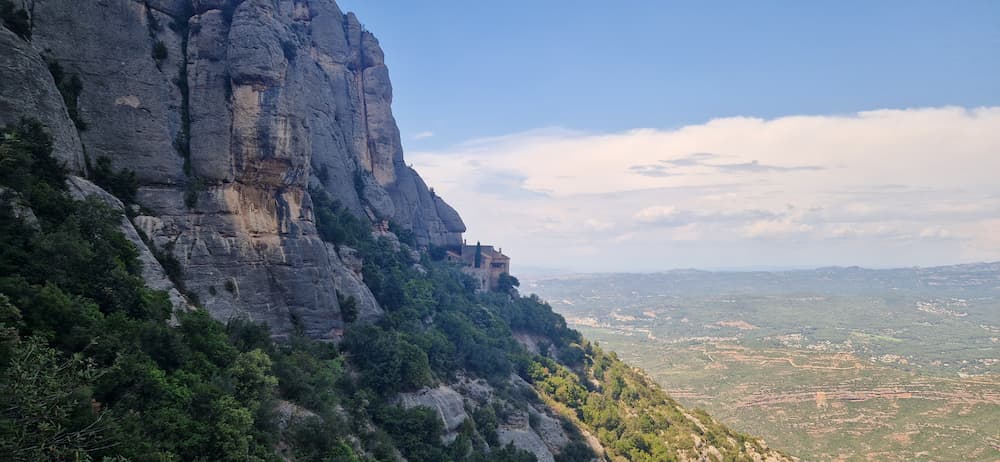
The name “Santa Cova” means “Holy Cave”. In English, you may also see it referred to as the Holy Cave of Montserrat or the Holy Grotto of Montserrat.
The site itself is modest in size, but its symbolic value is enormous. The basilica is where the Black Madonna is venerated today, but the Santa Cova represents the legendary origin of that devotion.
This is why the Santa Cova is not just another viewpoint or side trail. It is one of the places that gives Montserrat its deeper meaning.

Why is the Santa Cova important?
The Santa Cova is important because it connects three essential parts of Montserrat: the mountain, the legend of the Virgin and the religious identity of the sanctuary.
For centuries, pilgrims came to Montserrat not only to pray before the image of the Virgin, but also to visit the place where tradition says that image was discovered.
That distinction matters.
The monastery became the main religious centre of Montserrat, but the Santa Cova kept the emotional force of the origin story. It was the place where the mountain and the legend met.
Today, even if you are not visiting for religious reasons, the Santa Cova helps you understand Montserrat better. It shows that Montserrat is not only a spectacular natural landscape or a famous day trip from Barcelona. It is also a place shaped by memory, devotion, art and Catalan history.
The Legend Behind the Santa Cova
According to Montserrat tradition, a group of shepherds saw mysterious lights descending from the sky and stopping at a specific point on the mountain. The phenomenon repeated several times, and the shepherds eventually informed their community.
When they went to the place indicated by the lights, they found an image of the Virgin Mary inside a cave.
The bishop wanted to move the image to Manresa, but according to the legend, when the group reached the place where the early church of Montserrat would later stand, the image became so heavy that it could not be moved any further.
This was interpreted as a sign: the Virgin wanted to remain in Montserrat.
From a historical point of view, this story should not be read as a literal chronicle. It is a traditional account explaining the spiritual origin of the sanctuary. But for visitors, the legend remains essential because it explains why this small cave became one of the most meaningful places in Montserrat.
A short history of the Santa Cova de Montserrat
Historical background The origins of the Santa Cova de Montserrat Optional reading
For centuries, the Santa Cova de Montserrat has been identified as the place where the image of the Virgin was found. Early representations of Montserrat already showed a small cave on the mountainside between the monastery and the Llobregat valley.
By the late 16th century, a small chapel appears to have existed there. Over time, devotion to the Santa Cova grew, with ceremonies, processions and special prayers, especially during times of drought, plague and other crises.
The major transformation came in the 17th century. Historical documentation links the construction of a new path, chapel and associated buildings to the testamentary will of Francesc de Montserrat i Vives, first Marquis of Tamarit.
After his death in 1688, his daughter Gertrudis de Camporrells i de Montserrat, Marchioness of Tamarit, played a decisive role in financing and carrying out the project, which included daily mass at the Santa Cova and new buildings for worship and pilgrims.
The Santa Cova path and the “silver path”
Before the current path was built, reaching the Santa Cova was more difficult. Older routes existed, but they were less direct and less comfortable for pilgrims.
When the new chapel and surrounding buildings were planned, it became necessary to create a better route. The goal was to make access shorter, safer and more practical, even for people travelling with animals.
Building the path was not easy. Workers had to open a route through the rock, deal with steep slopes, build retaining walls and cross small ravines.
This is where one of the most memorable expressions linked to the Santa Cova comes from: the so-called “silver path”.
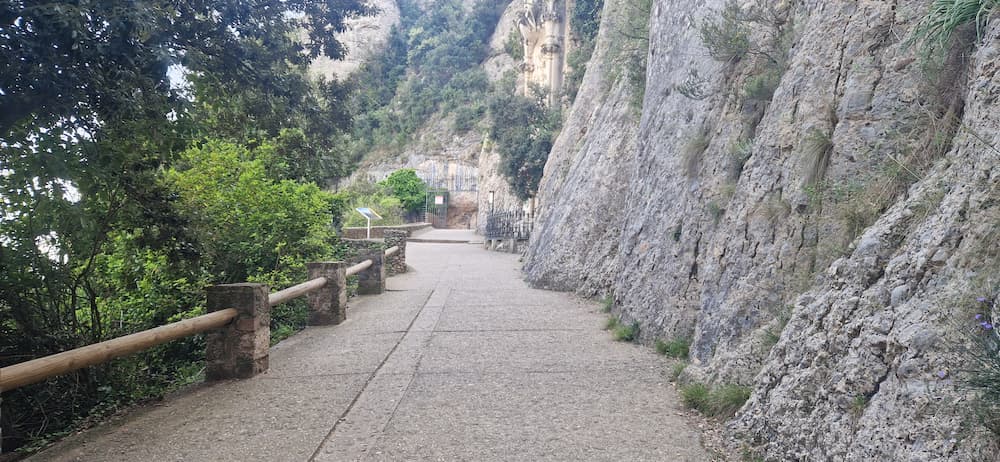
According to tradition, when the Marchioness of Tamarit saw how expensive the works were becoming, she asked whether the path was being made of silver. The phrase remained attached to the route.
Today, walking this path is one of the best parts of visiting the Santa Cova. It is not only a way to reach the chapel. It is part of the experience.
The Monumental Rosary: modernist art on the way to the Holy Cave
One of the most distinctive features of the Santa Cova path is the Monumental Rosary.
This artistic and devotional route began in the late 19th century, when the idea emerged to build a series of monuments dedicated to the mysteries of the Rosary along the path to the cave.
The first mystery was blessed in 1896, and the full group was completed in 1916. Over those twenty years, fifteen monumental works were created, financed by religious associations and private donors.
The artistic value of the route is remarkable. Several major architects and sculptors were involved, including names associated with Catalan modernism such as Enric Sagnier, Josep Puig i Cadafalch, Joan Martorell, Francesc de Paula del Villar, Antoni Gaudí and Josep Llimona.
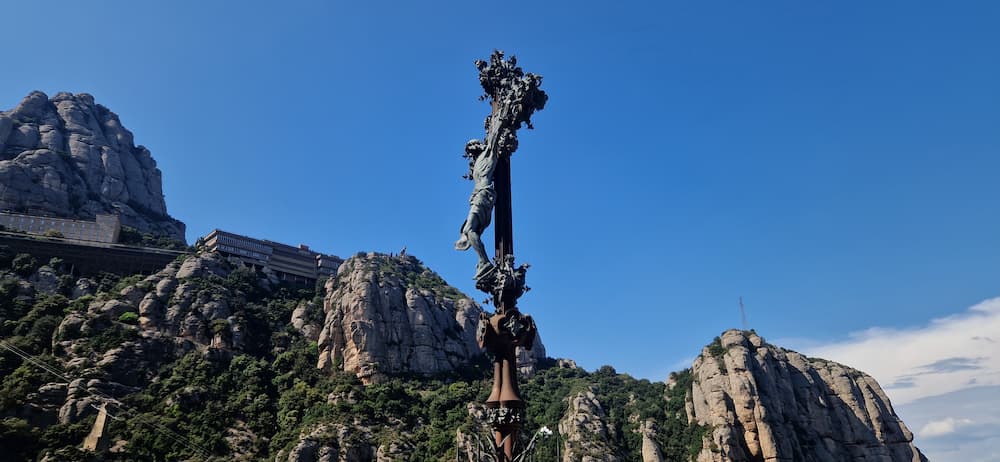
Because of these works, the old “silver path” also became an open-air artistic route. For some writers, it became a kind of “golden path” because of the symbolic and artistic value added by the Monumental Rosary.
For visitors today, this makes the walk much more interesting. You are not simply walking to a chapel. You are following a route where landscape, devotion and Catalan art meet.
Wars, damage and restorations
Historical background A history of destruction and restoration Optional reading
The history of the Santa Cova de Montserrat was also shaped by destruction, abandonment and restoration over the centuries.
During the Peninsular War, Montserrat suffered serious damage. In July 1812, French troops burned the buildings of the Santa Cova, leaving them unusable.
Later, the 19th-century confiscation of church properties deeply affected religious life at Montserrat. The monastic community was forced to leave for a time, and the image of the Virgin was hidden for protection.
The sanctuary reopened for worship in 1844, beginning a new period of restoration. Further works were carried out in the early 20th century. Between 1907 and 1912, the chapel was renovated, with architectural work by Lluís Muncunill i Parellada and sculptural work by Carles Flotats.
The site suffered damage again during the Spanish Civil War. In 1936, the chapel and its associated spaces were looted and damaged, although the building itself was not completely burned.
Is the Santa Cova worth visiting?
Yes, Santa Cova is worth a visit if you want to explore Montserrat beyond the basilica and the main viewpoints.
It’s especially worth visiting if you enjoy leisurely walks, religious history, symbolic sites, mountain views, or Modernist art.
La Santa Cova isn’t Montserrat’s most spectacular viewpoint, nor is it the mountain’s most adventurous hiking trail. But it offers something different: a deeper connection to the spirituality and history of Montserrat’s origins.
The walk is also a good option if you want to add a short, meaningful route to your visit without committing to a long hike like the Sant Jeroni trail.
For many visitors, La Santa Cova de Montserrat becomes one of the most memorable parts of the day because it feels like a quieter, more intimate place than the main area of the monastery.
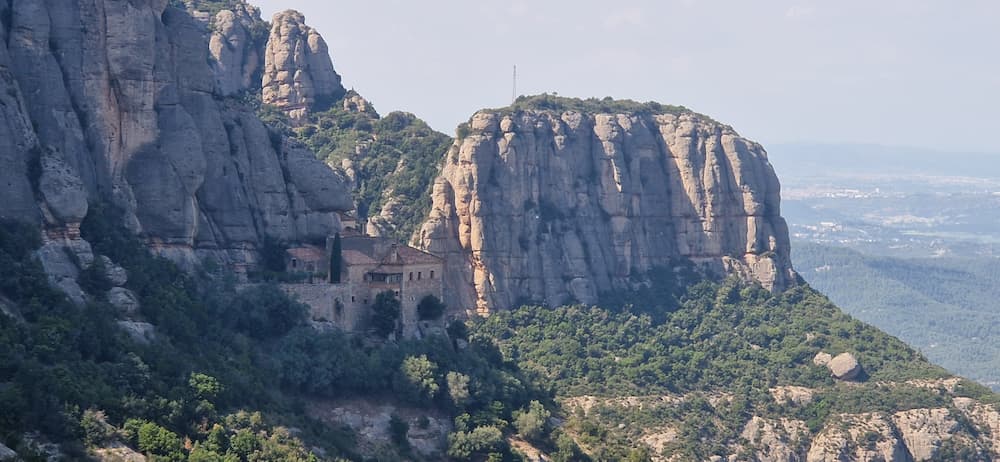
How to get to the Santa Cova from Montserrat Monastery
The Santa Cova is reached from the monastery area by following the path that descends from near the upper part of the sanctuary.
The route is signposted, but you should still allow enough time and wear comfortable shoes. The path descends from the monastery towards the Santa Cova, which means the return walk is uphill.
That is the most important practical point: the way there feels easier than the way back.
From the monastery, follow the signs for Santa Cova or Camí de la Santa Cova. The path leads you along the mountainside, with views over the valley and several stops linked to the Monumental Rosary.
The walk is not technically difficult, but it is not completely flat. In warm weather, it can feel more demanding than expected because of the exposed sections and the uphill return.
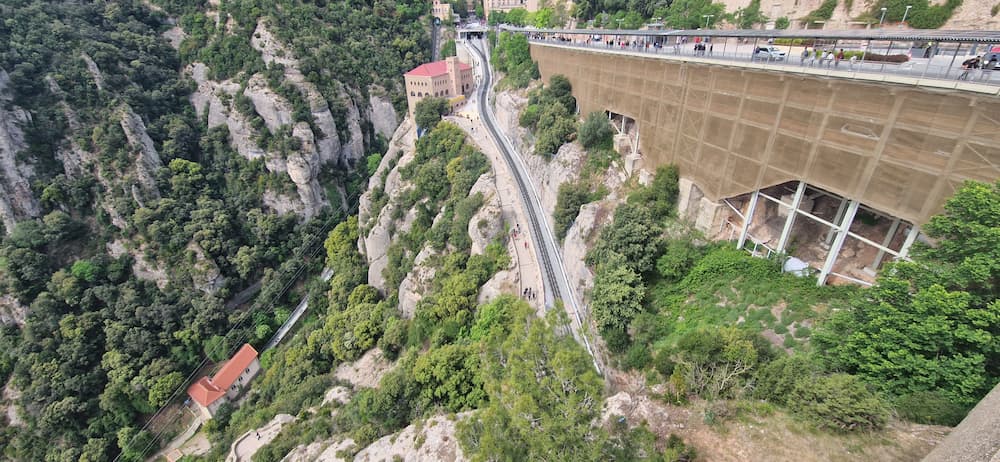
Santa Cova de Montserrat: Walk, Funicular Status, History & How to Visit
For most visitors, the walk from Montserrat Monastery to Santa Cova is an easy to moderate route, rather than a difficult hiking trail. It is suitable for people in average physical condition, but it may not be the best option if you have mobility issues, knee problems or very limited time.
The round trip usually takes between 45 minutes and 1 hour 15 minutes, depending on your pace, photo stops and whether you visit the chapel. The most important thing to know is that the path descends from the monastery to Santa Cova, so the return walk is uphill.
Bring water, especially in spring and summer, and avoid walking during the hottest part of the day. If you’d prefer a more comfortable trip, you can take the funicular to Santa Cova de Montserrat once it reopens—it’s currently out of service for maintenance— or check the best combined transport ticket options for Montserrat.
Download the Santa Cova walking route below to see the full trail details before your visit.
Santa Cova Funicular: current status
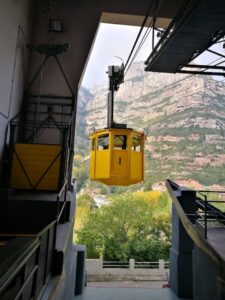
The Santa Cova Funicular normally connects the monastery area with the lower part of the route, making the walk to the Santa Cova de Montserrat shorter and easier. It does not go directly to the chapel, but it reduces the distance and the uphill return.
At the time of writing, the Santa Cova Funicular is out of service for maintenance until further notice, so you should not plan your visit assuming it will be available.
You can still visit Santa Cova de Montserrat on foot from the monastery, provided the chapel is open. The usual opening hours are 10:30 a.m. to 5:00 p.m.. Always check the official Montserrat schedules before your trip, especially if travelling with children, seniors or visitors with mobility concerns.
Practical tips before visiting the Santa Cova de Montserrat
The best time to visit the Santa Cova de Montserrat is usually in the morning or late afternoon, especially during the warmer months. It can get very hot at midday, and some parts of the trail are exposed to the sun.
Wear comfortable shoes. You don’t need hiking boots, but sandals or unstable footwear aren’t a good idea.
Bring water with you. The walk isn’t long, but the climb back up can be tougher than expected.
Check the status of the funicular before your visit. Don’t rely solely on old blog posts, as the Santa Cova funicular may be affected by maintenance work, seasonal changes, or extended closures.
Respect the chapel and the religious atmosphere of the site. Photography is not permitted inside. You should avoid taking or posting images of areas where photography is prohibited.
If you’re visiting Montserrat for just a few hours, plan carefully. The Santa Cova de Montserrat is worth the visit, but it takes time. If your priority is the basilica, the Black Virgin, the Sant Joan funicular, or a longer hike, you may have to choose.
Best way to include the Santa Cova in your Montserrat day trip
The Santa Cova works best as part of a well-planned Montserrat day trip.
If you arrive early, a good plan is to visit the basilica first, then walk to the Santa Cova before the mountain becomes too crowded or too hot. After returning to the monastery area, you can continue with lunch, viewpoints or another short walk.
If you are visiting Montserrat from Barcelona and want the easiest logistics, consider using a combined transport ticket or a guided tour that gives you enough time at the monastery.
For independent travellers, the most common route is to travel from Barcelona to Montserrat by train and then continue by rack railway or cable car. From the monastery area, you can visit the Santa Cova on foot. You can view the route here.
If you prefer a more convenient way to travel, see our guide to the best combined transport tickets to Montserrat from Barcelona.
My recommended combined transport ticket for visiting Montserrat from Barcelona.
Selected by The Ultimate Montserrat Guide for simplicity, convenience and first-time visitors.
Best if you want to combine Santa Cova with the full Montserrat experience.
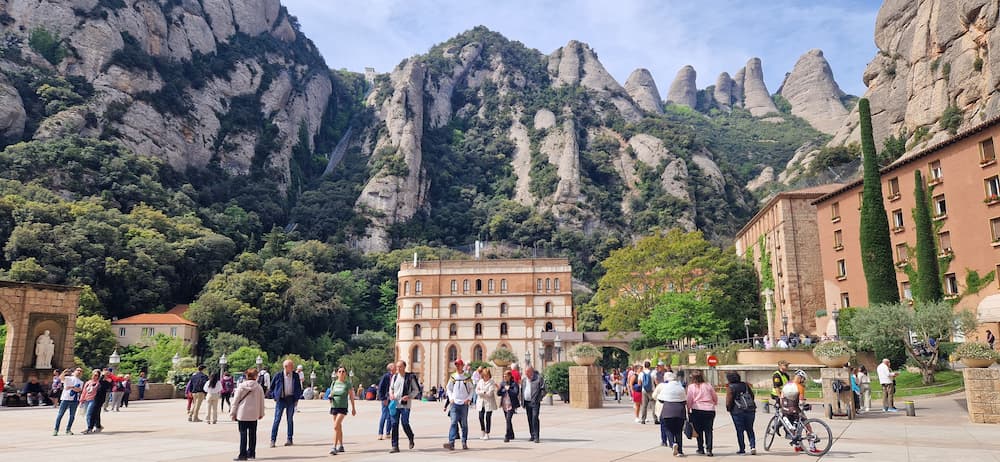
This is the best option if you want to travel from Barcelona and have enough flexibility to explore the area around the monastery and the museum, as well as take short walks, such as the one to Santa Cova de Montserrat.
If you would rather visit with a guide and avoid planning the transport yourself, check out our guide to the best Montserrat tours from Barcelona.
FAQs about the Santa Cova de Montserrat
What is the Santa Cova de Montserrat?
The Santa Cova de Montserrat is the Holy Cave where, according to tradition, the image of the Virgin of Montserrat was found. It is one of the most symbolic religious sites on the mountain.
Is the Santa Cova the same as the Black Madonna?
No. The Black Madonna is the image venerated inside the basilica of Montserrat. The Santa Cova is the place where, according to legend, the image was originally discovered.
Can you walk to the Santa Cova from Montserrat Monastery?
Yes. You can walk from the monastery to the Santa Cova by following the Camí de la Santa Cova. The route descends from the monastery and returns uphill.
Is the Santa Cova funicular working?
At the time of writing, the Santa Cova funicular is listed as out of service until further notice. Always check the official timetable before planning your visit.
How long does it take to visit the Santa Cova?
Most visitors should allow around 45 minutes to 1 hour 15 minutes for the round trip from the monastery, depending on pace, stops and time spent at the chapel.
Is the walk to the Santa Cova difficult?
The route does not present any technical difficulties, but it does include some inclines and is about 1.6 km long. The return to the monastery is uphill, so it may feel harder than the way down.
Is the Santa Cova worth visiting?
Yes, especially if you are interested in the history, legend and spiritual meaning of Montserrat. It is also a scenic and quieter walk compared with the busiest areas around the monastery.
Continue exploring Montserrat

If this guide helped you plan your visit, then it has done its job.
I’m based in Collbató, at the foot of Montserrat, and have been hiking and exploring the mountain for more than 20 years. Author of The Ultimate Montserrat Hiking Guide Book.
Some links may be affiliate links, at no extra cost to you.